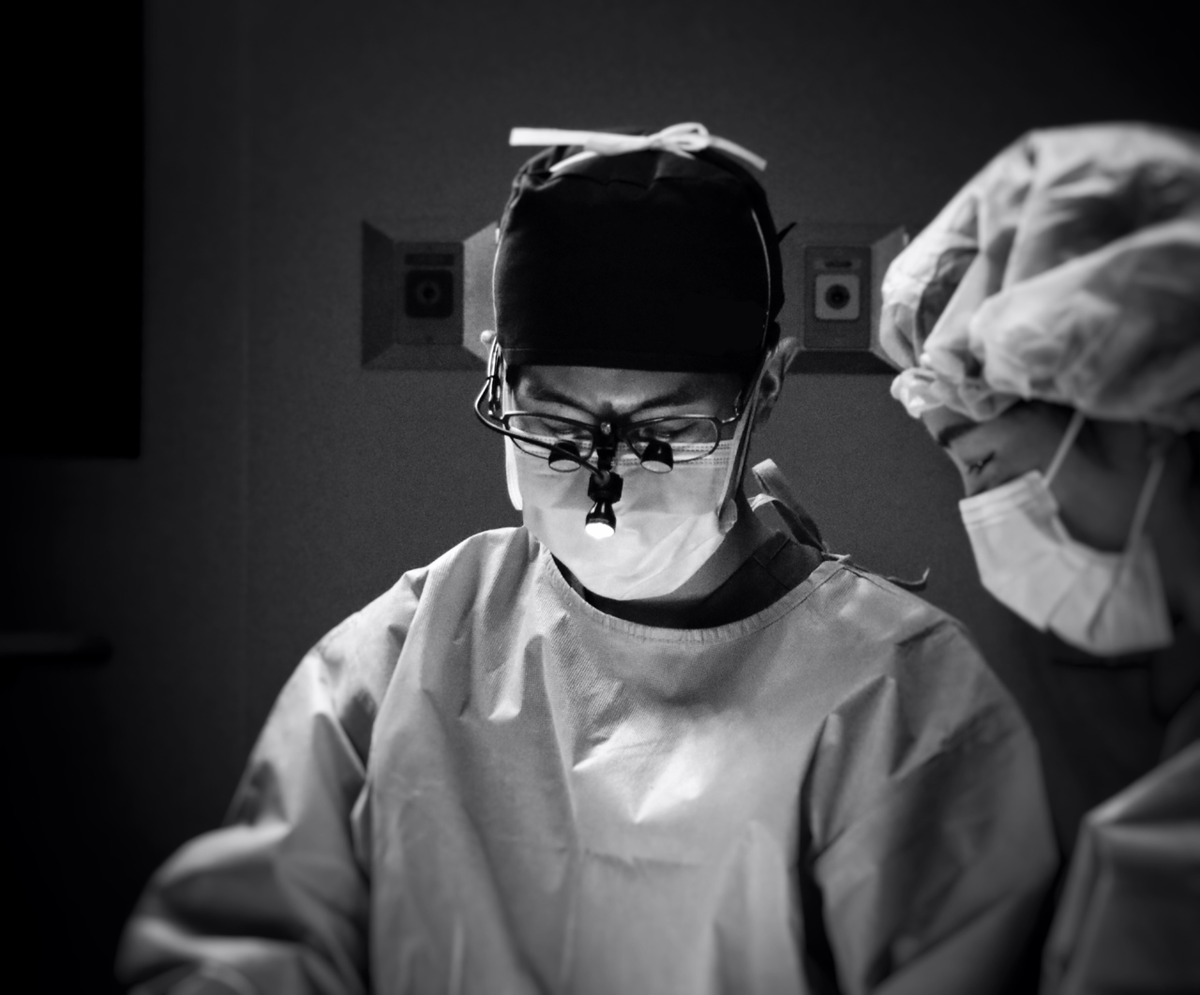
Considering facial balance for a more harmonious ETONNE eye surgery. ETONNE's discernment and the fine-tuning of lines offer naturally distinct and expressive eyes.
ETONNE CURATED EYE
Canthoplasty
Also called Eye Corner Surgery
Canthoplasty is the umbrella name for epicanthoplasty, upper medial canthoplasty, lateral canthoplasty, and lower canthoplasty: surgery that opens hidden areas at the inner or outer corner of the eye to adjust the horizontal length and shape of the eye. Depending on the condition of the eyes, one or more of these are planned together. At ETONNE in Gangnam, Seoul (Gangnam-daero, Nonhyeon Station), the surgery is performed by board-certified plastic surgeons Dr. Cho Jeongmok, Dr. Kim Harkyoung, Dr. Kim Jaegon, and Dr. Koo Heetae.
Discover a new you with wide-open, refreshed eyes.
The eyes are pivotal in shaping a person's first impression. To ensure your first impression is beautiful, ETONNE starts with a thorough analysis and provides definitive care.
Refreshed Eyes
Considering factors like the double eyelid line, the position of the iris, and the extent of sclera exposure, a comprehensive diagnosis is made, and the hidden space of the eyes is opened to adjust their length. Eye length in proportion to the face, a bright and soft gaze, and an eye shape in harmony with the whole face. Skilled plastic surgeons, experienced in eye surgery, use refined techniques to minimize scarring and create natural-looking eyes, as if they were your own from birth.
Delicate surgery, healthy recovery.
A board-certified plastic surgeon with skilled technique and a delicate touch operates swiftly to minimize strain on the body. Please see the table below for the recovery schedule.
Surgery time
About 30 min
Anesthesia
Local anesthesia / Sleep anesthesia
Admission
None, discharge on the day of surgery
After care
About 1 time
Stitch removal
About 5-7 days later
Recovery time
Makeup possible about 3 days later
Types of Surgery
Epicanthoplasty
This method improves the epicanthal fold at the front of the eye to widen the horizontal length of the eye. If your eyes still look cramped or small after double eyelid surgery, epicanthoplasty can create a natural and refreshed eye shape.
Upper Medial Canthoplasty
This surgical technique involves opening the upper front part of the eye to reveal the upper medial line of the eye that was previously covered.
Lateral Canthoplasty
Opening up the back part of the eye exposes the previously covered white area, improving a cramped look into larger, more refreshed eyes.
Lower Canthoplasty
While both lower canthoplasty and lateral canthoplasty aim to improve the appearance of the eye's tail, lateral canthoplasty adjusts the horizontal length, whereas lower canthoplasty modifies the height and direction of the lower eyelid at the back. Lower canthoplasty can be performed alone or, when needed, together with lateral canthoplasty to achieve a smoother and more refreshed eye shape.
ETONNE Eye Surgery POINTS
01 Accurate Analysis by Type
Thoroughly assessing the condition of the eyes before surgery and providing 1:1 customized consulting
02Delicate and Precise Surgery
Incision and dissection that minimizes the damage of normal structure.
03Function as well as Aesthetics
After identifying the specific issues, both aesthetic and functional aspects are improved simultaneously.
04Trustworthy Doctors
Comprised exclusively of Plastic Surgeons from Seoul National University Hospital, equipped with expertise and know-how derived from extensive experience.
POINT 1.
Detailed Diagnosis
Creating eyes that harmonize best with all the natural features of one’s face is crucial. ETONNE doesn’t just focus on the eyes; we consider what is necessary for the most beautiful eyes, taking into account the patient's entire facial condition to make informed decisions.
1. Brow position and shape
2. Eye opening strength(blepharoptosis) and skin sagging(pseudoptosis)
3. Shape of the outer corner and horizontal length
4. Use of the eyebrows for eye opening (brow compensation)
5. Amount of redundant skin
6. Thickness of eyelid skin
7. Shape of the lower lid and beyond
CASE & SOLUTION
When brow to lid length is narrow
Brow position correction AND / OR Blepharoplasty
Puffy eyes
Brow position correction AND / OR Fat removal
When use of brow elevation during eye opening
Blepharoptosis correction AND / OR Blepharoplasty AND / OR Brow position correction
Eyes appear tired
Blepharoptosis correction
Corner of the eyes looks droopy
Lateral canthoplasty
Simple cosmetic issues without complicated problems
Blepharoplasty
Corner of the eyes look upslanted
1. Correction of inner corner or Brow position correction 2. Lateral canthoplasty and vertical lengthening 3. Combination of the above
Rather than just creating a line or enlarging the eyes, the approach involves a comprehensive diagnosis considering various factors such as the distance between the outer corner of the eye and the orbital bone, eyebrow position, eyelid thickness, and the overall facial proportions for each case. This leads to a customized surgical plan and outcome. By analyzing the area around each individual's eyes and proceeding only with necessary procedures, a natural and balanced eye shape is achieved, avoiding any exaggerated results.
POINT 2.
Tailored surgical planning
ETONNE tailors surgical approaches by considering patients' needs, current conditions, and personal circumstances, aiming for the best-suited method. We pursue the patient's aesthetic preferences together with objective beauty.
POINT 3.
Custom Design with Detailed Adjustments
By accurately analyzing the patient's eye condition, we design to discover their unique personality. We aim to enhance both functional and aesthetic aspects, taking into account each individual's desired improvements and current eye condition to achieve the ideal eye shape.
ETONNE's top priority is building trust based on patient safety and satisfaction. From sharing transparent processes before surgery to providing professional care afterwards, ETONNE commits to delivering high-quality medical services.
Design Only for You
ETONNE designs unique, lasting beauty using experienced surgeons' skills to tailor surgery methods and materials to each individual.
Accurate and Clear Diagnosis
We take the time to examine every patient as if they were our only one, ensuring an accurate diagnosis. Instead of using complex medical terms, we explain everything in the simplest and clearest language possible, so patients can feel at ease and fully understand their condition and treatment options.
Dedicated 1:1 Care by the Surgeon
The plastic surgeon responsible for the operation manages every aspect of the surgery, including the follow-up and treatment process, offering direct and personalized 1:1 care throughout.
Safety Ensured During Surgery
The operating rooms are fully equipped with gas and suction systems, and an uninterruptible power supply (UPS) ensures continuous power during unexpected outages, preparing for all possible scenarios during surgery.
Customized Recovery Program for the Healing
Quickly, thoroughly. Exceptionally fast recovery beyond expectations is also a testament to ETONNE's expertise. The physician personally manages with meticulous care according to the patient's constitution and condition. For a swift return to daily life, choose ETONNE
Proactive Prevention
Based on the highest standards of technology, we meticulously plan surgeries to minimize bruising and swelling from the very beginning, ensuring a smoother and quicker recovery process.
Closely monitored treatments
Your recovery is supported through a combination of prescribed medications, specialized laser treatments, and proven effective injections to facilitate overall healing.
Postoperative Care
After surgery, we provide a kit containing pain relievers, antiseptic supplies, ointment, masks, and instructions to enable self-care and facilitate recovery.
Swelling Reduction
We provide a care kit that includes a cold compress pack to assist in rapid swelling relief.
1:1 Consultation
We offer a 1:1 chat service and keep emergency contact information readily available, leaving no room for worry.
Adding Detail to Naturalness
CURATED EYE SURGERY
Precautions
Swelling and bruising may occur after surgery, and how long they take to subside varies from person to person. The incision site leaves a scar, and in rare cases bleeding, infection, inflammation, or left–right asymmetry may occur, which may require additional treatment. Epicanthoplasty, upper medial canthoplasty, lateral canthoplasty, and lower canthoplasty differ in where and how far the eye is opened, so the course of recovery and the points to watch differ by method. With lateral canthoplasty, the opened area may reattach, and with lower canthoplasty, more of the white of the eye may show than expected; if the degree of opening settles differently from what was expected, additional correction may be needed. Please tell us at your pre-surgery consultation about any medications you take, including blood thinners such as anticoagulants, as well as any medical conditions and whether you smoke. During recovery, please avoid alcohol and smoking and attend follow-up visits as scheduled. Please make your decision after you have been fully informed of the risks and of alternative options. Results and recovery vary from person to person.
Who It's For
When the epicanthal fold at the inner corner covers the inner part of the eye and makes the eyes look heavy
When the eyes still look heavy or small even after double eyelid surgery
When the white of the eye at the outer corner is covered, making the horizontal length of the eye look short
When the outer corners of the eyes slant up or down and you want to adjust the direction of the eye shape
How are epicanthoplasty and lateral canthoplasty different?
Epicanthoplasty improves the epicanthal fold at the inner side of the eye to open the hidden part of the inner corner, while lateral canthoplasty opens the outer side of the eye so that the white of the eye at the outer corner, which was covered, becomes visible. At ETONNE, we look at the double eyelid line, the position of the iris, and how much of the white of the eye shows to decide which to do, or whether to do both.
What are upper medial canthoplasty and lower canthoplasty?
Upper medial canthoplasty opens the area where the upper part of the inner corner is covered downward at a 45-degree angle, so that the upper line of the inner corner becomes visible. Lower canthoplasty changes the height and direction of the lower eyelid at the outer side of the eye; it is distinct from lateral canthoplasty, which adjusts the horizontal length, and it is performed alone or, when needed, together with lateral canthoplasty.
Is canthoplasty sometimes done together with double eyelid surgery?
If the eyes still look heavy or small after double eyelid surgery, epicanthoplasty is considered as well. Canthoplasty is planned by looking at the balance between the double eyelid line and the length of the eye, so whether to combine it with double eyelid surgery is decided after an examination.
Where will the scar be?
Canthoplasty involves an incision where the eye is opened, so a scar remains at that site. Epicanthoplasty and upper medial canthoplasty involve an incision at the inner corner of the eye, and lateral canthoplasty at the outside of the outer corner. Lower canthoplasty involves an incision on the conjunctival side (the inner surface of the eyelid), so no incision line is made on the outer skin. How the scar settles differs depending on your skin condition and the method.
What are the anesthesia, surgery time, and recovery schedule?
The surgery takes about 30 minutes under local anesthesia or sleep anesthesia, and you go home the same day without hospitalization. Stitches are removed after about 5–7 days, makeup is possible from about 3 days after surgery, and about one follow-up visit is needed after surgery. How long swelling and bruising take to subside varies from person to person.